RMSCC Supply Chain Information Standard
| Standard: | Global Identification Number for Samples of Analysis (GINSA) |
|---|---|
| Status: | DRAFT |
| Issue date: | DRAFT |
| Endorsement: | Australian Meat Processors Corporation (AMPC) |
| Purpose: |
The purpose of this standard is to create a standardised model for identifying and capturing key information around samples with a globally unique identifier. GINSA can be used by companies to identify samples that are collected for analysis and link them to certificates of analysis. By using a globally unique identifier, processing establishments can reduce labour costs for data entry, prove automated receipt of arrival at a service provider and promptly match failed tests to original, sourced material. |
| Scope: |
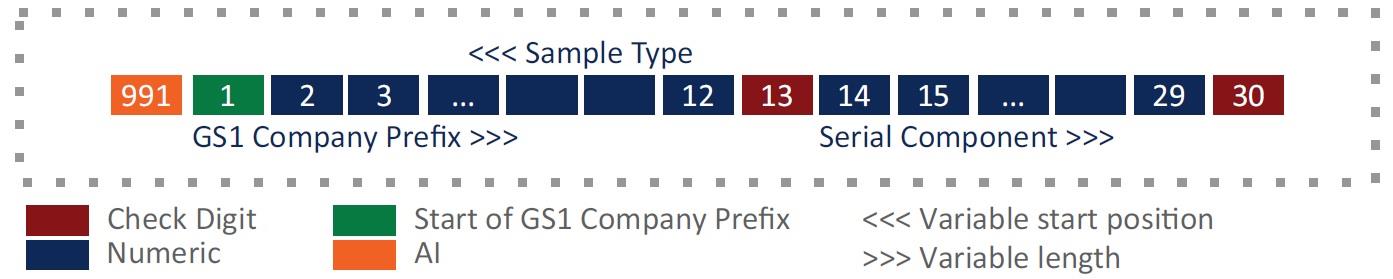
GINSA combines its GS1 Application Identifier with GS1 Company Prefix and Sample Type number. It is represented on a sample label in a both human-readable format and a GS1 QR code. This avoids duplications and achieves universal uniqueness across samples. The samples collected receive their own serial number and allow for additional attributes to be linked back to the sample through the database. This, then, would be digitally sent using globally recognised messaging standards. |
| References: |
GS1 GINSA standards, Identifying product samples |
| Details: |
GS1 standards GS1 standards use identification keys. The sample-type numbers are assigned by the organisation for each sampling matrix. The sampling matrix includes sampled material, the context in which it was collected and the handling and storage requirements. The sample number comprises 30 digits and includes the following:
|
| Comments and feedback: | |
| Additional information: |
Additional information is available from; |